
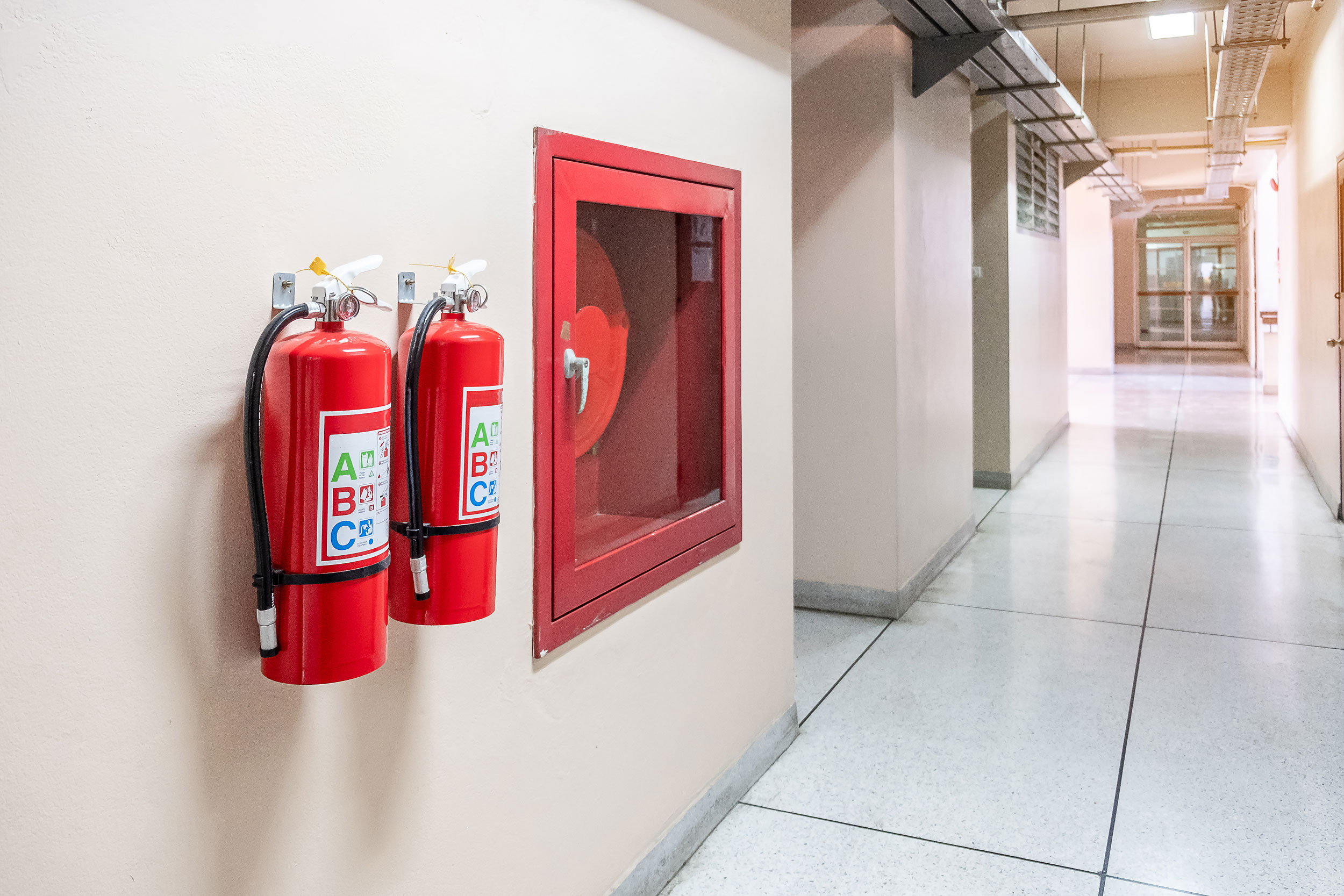
Fire extinguishers should get a quick visual check every month and a full inspection and maintenance visit from a qualified technician once a year. That schedule comes from NFPA 10, the national standard for portable fire extinguishers. Some extinguishers also need six-year maintenance and periodic hydrostatic testing. Our fire extinguisher service keeps every unit on schedule.
A well-maintained fire extinguisher can stay in service for many years, but it is only good as long as it passes inspection and hydrostatic testing. Dry chemical extinguishers are typically hydrostatically tested every 12 years, and CO2 and water extinguishers every 5 years. Units that fail, are damaged, or are no longer supported by the manufacturer should be replaced.
Most fire extinguishers do not have a printed expiration date, but they do age out. Check the inspection tag, the pressure gauge, and the manufacture date on the label. If the gauge is out of the green, the tag is more than a year old, or the unit is damaged, it needs service or replacement.
Look for a current inspection tag, a gauge needle in the green zone, an intact pull pin and tamper seal, and a body free of dents and rust. Then check the manufacture date. If you are unsure, our technicians can inspect it and tell you whether it can be serviced or should be replaced.
Southern Fire Protection recharges fire extinguishers for businesses across Southeast Missouri. Any extinguisher that has been used, even briefly, needs to be recharged before it goes back on the wall. Call us to schedule a recharge or drop off.
The cost to recharge a fire extinguisher depends on its size, type, and agent. Small ABC units cost less than large, CO2, or clean agent extinguishers. Call us with the size and type and we will give you a price.
Commercial kitchens with deep fryers and cooking oils need a Class K fire extinguisher near the cooking line, in addition to a kitchen hood fire suppression system. ABC extinguishers are still used elsewhere in the building.
A clean agent fire extinguisher uses a gas that puts out fires without leaving residue. It is a good fit for server rooms, electrical panels, and electronics that water or dry chemical would damage. Learn more on our clean agent fire suppression page.
Do not throw a charged fire extinguisher in the trash. A fire protection company can safely depressurize and recycle it. When we replace extinguishers during service, we can take the old ones with us.
Businesses must keep extinguishers visible, accessible, and properly mounted, perform monthly visual checks, and have a qualified technician complete annual maintenance with a dated tag. Your local fire marshal and insurance carrier may have additional requirements.
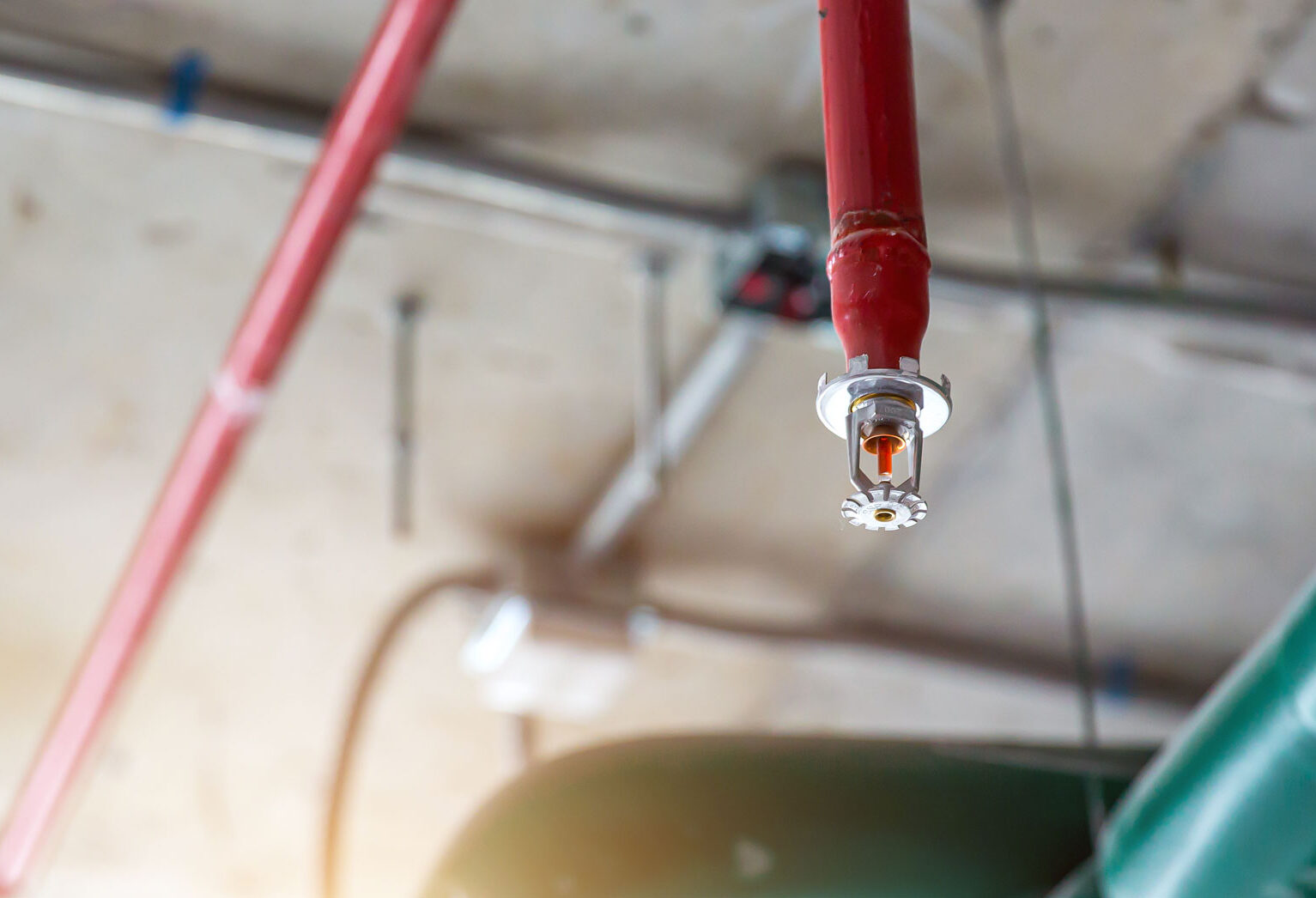
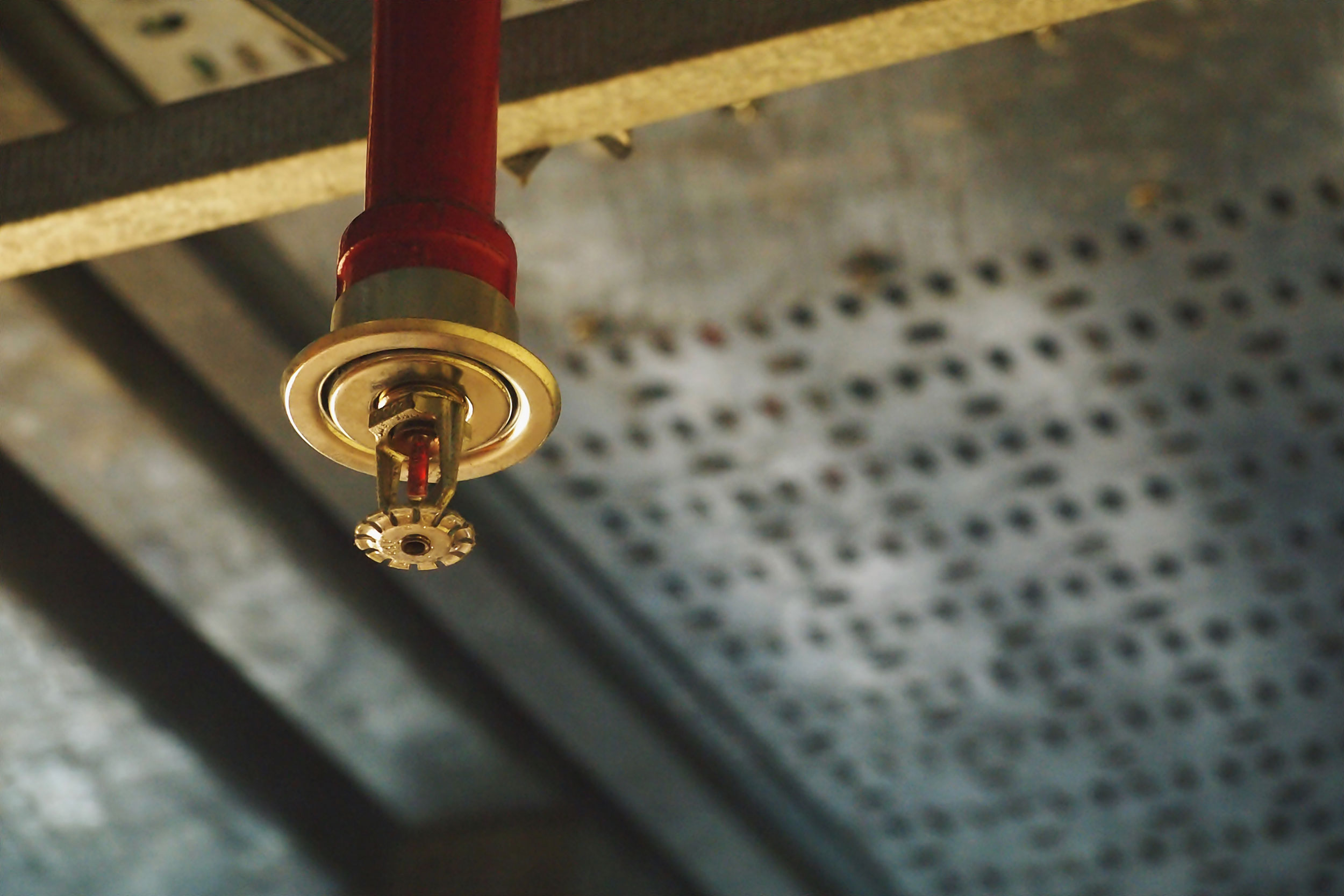
Each sprinkler head has a heat-sensitive element. When a fire heats that element to its rated temperature, only that head opens and sprays water on the fire. Most fires are controlled by just one or two heads, not the whole system.
Fire sprinkler requirements depend on the building’s size, use, occupancy, and the codes adopted by your city or county. New construction, additions, and changes of use often trigger requirements. We can help you understand what applies to your fire sprinkler project.
NFPA 25 calls for quarterly, annual, and five-year inspections and tests, depending on the component. See our inspection, testing, and maintenance page for the full schedule.
A dry fire sprinkler system keeps its pipes filled with pressurized air instead of water. When a head opens, the air escapes, a valve trips, and water flows in. Dry systems protect unheated spaces like warehouses, loading docks, and attics where water-filled pipes could freeze.
The cost of a fire sprinkler system depends on building size, layout, water supply, and system type. We provide project-specific quotes after reviewing your plans or visiting your building.
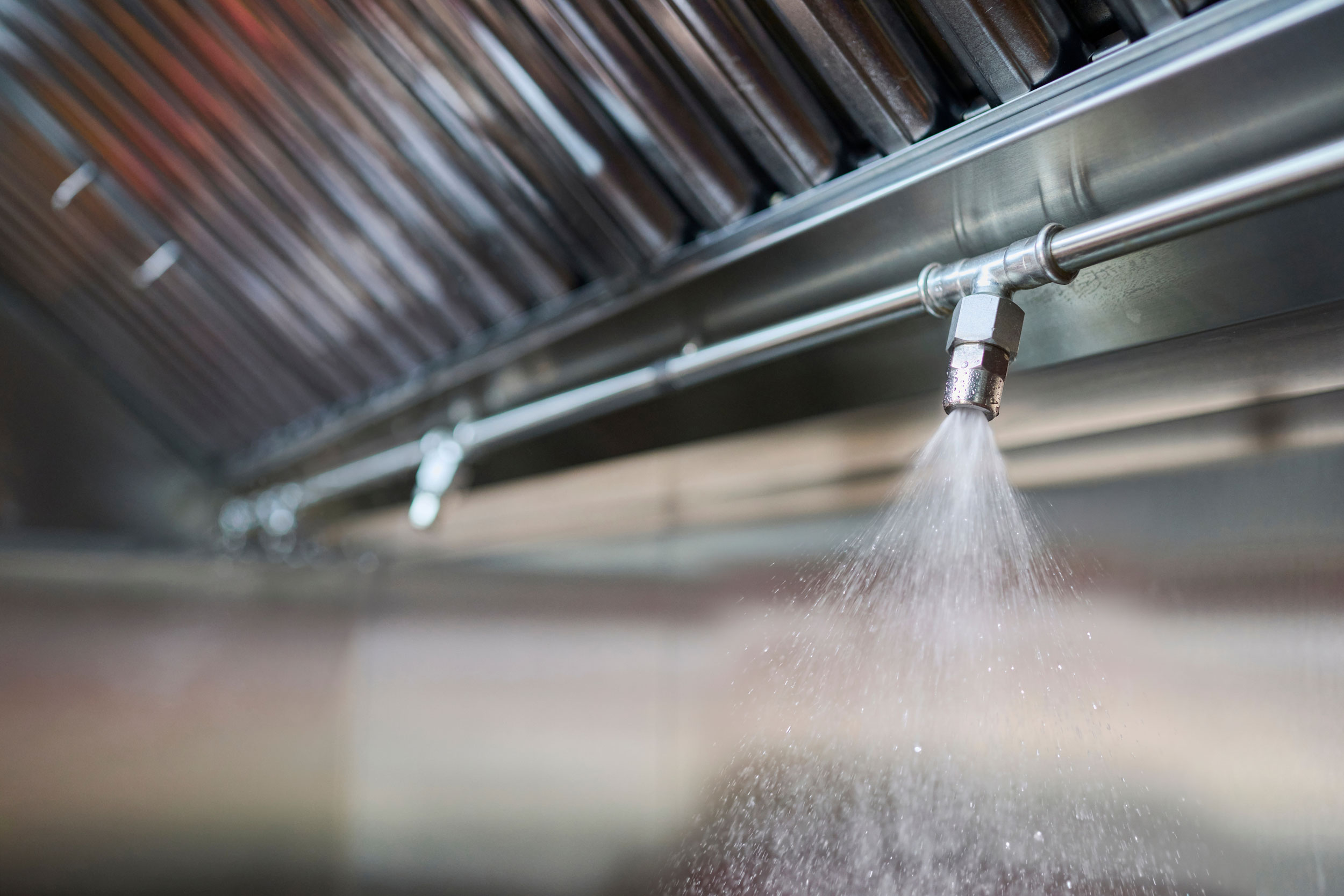
A fire suppression system uses an agent other than plain water, such as wet chemical or a clean agent gas, to put out fires in specific hazards. Common examples are kitchen hood systems over cooking lines and clean agent systems in server rooms.
Kitchen hood suppression systems are typically inspected every six months. Clean agent systems are typically inspected at least once a year, with additional checks on agent quantity and pressure. We can put all of your systems on one schedule.
Backflow testing checks that the backflow preventer on your fire sprinkler line stops water from flowing back into the public water supply. Learn more on our backflow testing page.
A backflow test uses a calibrated gauge connected to the assembly’s test cocks to confirm each valve holds pressure correctly. Most tests take less than an hour, and the water to your sprinkler system may be briefly shut off during the test.
Backflow testing protects your community’s drinking water from contaminated sprinkler water. Water providers and local codes typically require annual testing of fire sprinkler backflow preventers.
We serve businesses throughout Southeast Missouri, including these communities and the areas around them:
Our team is here 24 hours a day, 7 days a week. Give us a call or contact us online.